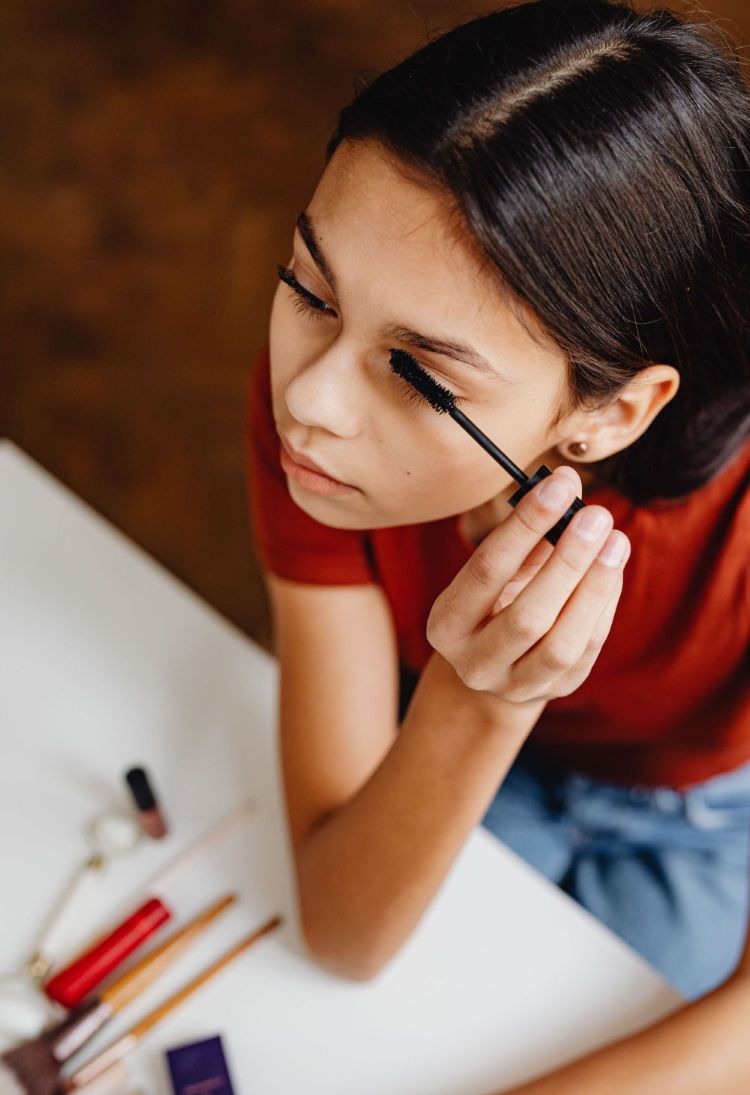
Tweens and Makeup: A Therapist’s Guide for Parents
How to navigate makeup, self-expression, confidence, and boundaries with your middle schooler. How to talk to tweens about makeup.
If your middle schooler is suddenly interested in mascara, lip gloss, or a full face of makeup, you may have questions. Is she too young? How do you set boundaries without creating a power struggle? And how can you help her develop confidence in a world that puts so much emphasis on appearance?
As a therapist, I encourage parents to approach these conversations with curiosity rather than criticism. The goal isn’t necessarily to prevent your child from wearing makeup. It’s to help her develop a healthy relationship with her appearance, build confidence, and make thoughtful choices as she grows.
1. Start With Curiosity, Not Criticism
When your daughter asks for makeup or tries a new look, it’s tempting to respond with, “You’re too young for that!” Instead, try to understand what makeup means to her.
Ask questions like:
- “What do you like about this look?”
- “Where did you see this style?”
- “How do you feel when you wear makeup?”
Is she exploring her creativity, trying to fit in with friends, or hoping to feel more confident? You don’t have to agree with every choice to listen without judgment.
Connection before correction. When kids feel heard rather than shamed, they’re more likely to come to us with questions and concerns in the future.
2. Frame Makeup as Self-Expression, Not Something to Fix
Makeup can be a creative outlet, much like choosing a favorite outfit or making art. The message we want to avoid is that makeup is necessary to hide flaws or become beautiful.
You might say, “Makeup can be a fun way to experiment with colors and styles. You can enjoy wearing it, and you don’t need it to be beautiful.”
Pay attention to how you talk about your own appearance, too. Children notice when we criticize our wrinkles or say we can’t leave the house without covering up our imperfections.
We don’t have to pretend we always love how we look. Instead, we can model a balanced relationship with our appearance: “I enjoy wearing lipstick, but I don’t need it to feel good about myself.”
These everyday moments help children understand that makeup can be a choice rather than a requirement.
3. Talk About Beauty Standards Without Shaming Different Styles
Our kids are surrounded by beauty influencers, filters, edited photos, and often unrealistic expectations about skin and appearance. Rather than simply criticizing these influences, use them as opportunities for conversation.
Try asking:
- “What do you notice about how this person uses makeup?”
- “How is their style different from someone else’s?”
- “Do you think this image has been edited?”
- “Can I share my thoughts about this look?”
Practice describing differences neutrally rather than labeling styles as good, bad, or inappropriate. Explore how people across generations and cultures use makeup differently.
The goal is to help your child think critically about beauty messages without teaching her to judge others for their choices.
4. Build Her Self-Worth Beyond Her Appearance
One of the most important things we can do as parents is help our children develop an identity that extends beyond how they look.
Of course, tell your daughter when you think she looks beautiful. But make sure she also hears specific compliments about her character, abilities, and interests.
For example:
- “I love how you included your friend when she felt left out.”
- “I’m proud of how hard you worked on that project.”
- “You have such a creative way of looking at things.”
- “I admire how you stood up for yourself.”
Think of these comments as small deposits into her self-worth bank account. Over time, they reinforce the message that her value comes from many places.
When she experiences a hurtful comment from a peer or pressure to look a certain way, she can draw on that stronger foundation. We can’t prevent every painful comment, but we can help our children understand that their worth isn’t determined by other people’s opinions.
5. Set Boundaries While Allowing Independence
You can respect your child’s growing independence and still have family rules about makeup.
Consider agreeing on which products are appropriate for school and which might be reserved for parties, performances, or special occasions. You can also discuss time spent getting ready and basic makeup hygiene.
Whenever possible, invite your child into the conversation: “I want you to have some freedom to experiment with your style. Let’s talk about what feels appropriate for school and what we might save for other occasions.”
Collaborating doesn’t mean your child makes every decision. It means she has an opportunity to share her perspective and understand your reasoning.
What if you’re not sure what you think?
You don’t have to make every decision on the spot. If your daughter asks for a product or style you’re unsure about, try saying, “I want to think about that before I give you an answer. Let’s talk again in a couple of days.”
Take time to consider whether your concern is about safety, developmental readiness, or your own discomfort. Discuss the decision with your partner if appropriate, and be sure to revisit the conversation.
Remember, overly rigid rules can sometimes turn ordinary experimentation into a power struggle. My mom didn’t want me to dye my hair or get a nose piercing. I found my ways to push those limits until I was in college and did both.
This doesn’t mean every boundary is wrong. It simply reminds us to choose our boundaries intentionally and leave room for growing independence.
6. Discuss Self-Expression and the Messages We Send
As children grow, they begin to understand that appearance can communicate something to the world. Makeup, clothing, hairstyles, and piercings may all be part of figuring out who they are.
We want our children to have freedom of expression while also recognizing that people sometimes make assumptions based on appearance. Those assumptions may be unfair, but they can still influence how others respond.
You might ask:
- “What do you want this style to communicate?”
- “How might different people interpret it?”
- “Do you think those assumptions are fair?”
The purpose isn’t to scare your child into conforming. It’s to help her make informed choices while understanding the world she’s navigating.
We can teach our children that they deserve respect regardless of how they look while also helping them think through the possible consequences of different forms of self-expression. Both things can be true.
7. Keep Makeup and Skincare Simple
Tweens generally benefit from a simple skincare routine rather than complicated regimens promoted on social media.
Focus on the basics:
- Gentle cleansing to remove dirt and makeup.
- Moisturizing with a product suited to her skin.
- Daily sun protection with broad-spectrum sunscreen.
- Makeup hygiene, including removing makeup before bed and avoiding sharing eye makeup.
If makeup fits your family’s boundaries, lighter options such as tinted lip balm, mascara or blush can be a place to start.
Be cautious about trendy skincare products that promise flawless skin. Ingredients such as retinoids and exfoliating acids can irritate young skin when used unnecessarily or incorrectly. A basic routine is often enough, and persistent acne or irritation can be discussed with a healthcare professional.
Keep the focus on caring for her skin rather than making it look perfect. Healthy skin doesn’t have to mean completely clear skin.
8. Make It an Opportunity to Connect
Makeup doesn’t have to become a source of conflict. It can be an opportunity to spend time together and learn more about your child’s interests.
Consider having a low-pressure makeup afternoon at home, watching a tutorial together, or visiting a beauty retailer such as Sephora or Ulta Beauty. You could also invite a trusted adult whose style your daughter admires to share some tips.
These moments allow you to teach practical skills while keeping your relationship at the center. You may discover that your child enjoys makeup as an art form—or learn that she’s feeling anxious about fitting in with her peers.
Either way, spending time together creates space for more meaningful conversations.
A Final Thought: The Goal Is Confidence, Not Control
The middle school years are full of experimentation. Children are figuring out who they are, where they fit in, and how they want to present themselves to the world. Makeup may be one small part of that process.
As parents, we don’t have to approve of every trend or say yes to every request. We can set boundaries, share our values, and help our children think critically about the messages they receive. We can also stay curious and make room for self-expression.
Most importantly, we can keep reinforcing a message they need to hear again and again:
You are more than your appearance. You don’t need to change your face to be worthy of love, belonging, or respect. You can enjoy experimenting with how you look without making your looks the measure of your worth.
The goal isn’t to raise children who never care about their appearance. It’s to raise children who understand that how they look is only one small part of who they are.
Ready when you are
Seeking help is courageous. Audacious, in fact.
Claire Eliassen, MA, LPC offers counseling for preteen girls, therapy for women and moms, and play therapy for kids in central Denver. Start with a free phone consultation.